

🌟 Introduction: The New Era of Cybersecurity Challenges
As businesses become increasingly digital, cyber threats are becoming more advanced, automated, and difficult to detect. In 2026, organizations face a new generation of cyberattacks powered by artificial intelligence, making cybersecurity more important than ever.
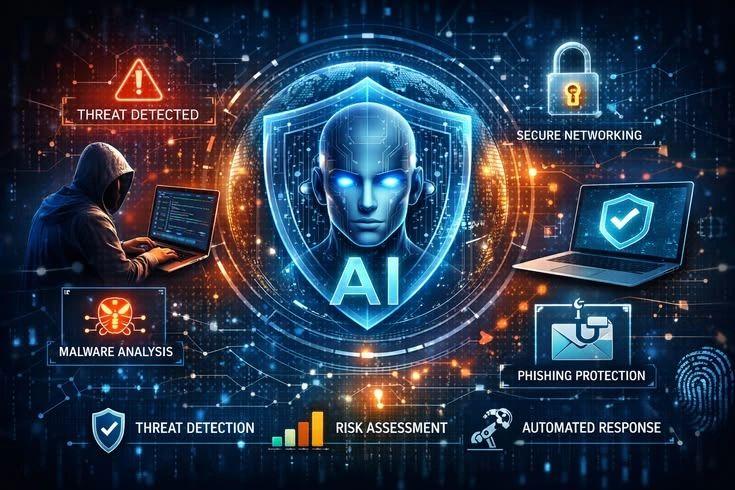
At the same time, AI is also becoming one of the most powerful tools for defending against these threats. AI-powered cybersecurity solutions can analyze massive amounts of data, identify suspicious activities, and respond to attacks faster than traditional security methods.
The future of cybersecurity will depend on the ability to use AI for protection while defending against AI-powered attacks.
🤖 1. The Rise of AI-Powered Cyber Threats
Cybercriminals are increasingly using artificial intelligence to create more sophisticated attacks.
Traditional cyberattacks often required manual effort, but AI allows attackers to automate and improve their techniques.
Examples of AI-Based Threats:
🎭 AI-Generated Phishing Attacks
AI can create highly personalized phishing emails that appear more realistic and convincing, making them harder for users to identify.
🦠 Intelligent Malware
AI-powered malware can adapt its behavior, avoid detection, and find weaknesses in security systems.
🗣️ Deepfake Attacks
Cybercriminals can use AI-generated voices, images, and videos to impersonate executives or trusted individuals.
🔓 Automated Password Attacks
AI can analyze patterns and improve attempts to break weak passwords.
These evolving threats require smarter cybersecurity solutions.
🧠 2. AI-Based Threat Detection: Finding Problems Faster
One of the biggest advantages of AI in cybersecurity is its ability to detect threats quickly.
Traditional security systems often rely on known attack patterns. AI can identify unusual behavior even when a threat has never been seen before.
How AI Threat Detection Works:
- 📊 AI analyzes network activity and user behavior.
- 🔍 It identifies unusual patterns.
- ⚠️ It detects potential security risks.
- 🚨 Alerts are generated automatically.
- 🛡️ Security teams respond faster.
This helps organizations discover threats before they cause major damage.
⚙️ 3. Security Automation: Faster Response to Cyber Attacks
Cybersecurity teams often handle thousands of alerts daily. AI automation helps reduce workload and improve response speed.
AI-powered security automation can:
✅ Block suspicious activities
✅ Detect malware automatically
✅ Investigate security alerts
✅ Prioritize critical threats
✅ Automate incident responses
For businesses, this means faster protection with fewer manual processes.
🏢 4. How AI Helps Businesses Improve Security
Organizations of all sizes can benefit from AI cybersecurity solutions.
Small Businesses
Small companies often lack large security teams. AI tools can provide affordable protection through:
- Automated monitoring
- Threat alerts
- Security recommendations
- Vulnerability detection
Large Enterprises
Large organizations use AI for:
- Advanced threat intelligence
- Network protection
- Identity security
- Compliance monitoring
AI allows businesses to strengthen security without increasing complexity.
🔍 5. AI in Modern Security Operations Centers (SOCs)
Security Operations Centers (SOCs) monitor and respond to cyber threats.
AI is transforming SOC operations by helping analysts:
🧠 Analyze large amounts of security data
⚡ Detect attacks faster
📈 Predict possible threats
🔄 Automate repetitive tasks
AI-powered SOCs allow cybersecurity professionals to focus on complex investigations instead of spending time on routine alerts.
🔐 6. Protecting Data With AI-Driven Security
Data is one of the most valuable assets for modern businesses.
AI helps protect sensitive information through:
Identity and Access Management
AI can detect unusual login attempts and prevent unauthorized access.
Fraud Detection
AI systems can identify suspicious financial activities in real time.
Data Monitoring
AI continuously monitors data movement to detect potential leaks.
Network Security
AI analyzes network traffic and blocks suspicious behavior.
⚠️ 7. Challenges of Using AI in Cybersecurity
Although AI provides powerful security benefits, organizations must also consider challenges.
AI Security Risks
Attackers can target AI systems themselves by manipulating data or exploiting vulnerabilities.
False Alerts
AI systems may sometimes generate incorrect warnings, requiring human review.
Skilled Professionals
Businesses still need cybersecurity experts who understand both technology and risks.
Privacy Concerns
Security monitoring must balance protection with responsible data handling.
🌍 8. The Future of AI-Powered Cybersecurity
The future of cybersecurity will involve continuous collaboration between humans and AI.
Emerging trends include:
🚀 Autonomous security systems
🧠 AI-powered threat prediction
🔒 Privacy-focused security solutions
☁️ Cloud-based AI protection
🤖 Intelligent security assistants
As cyber threats become smarter, defensive technologies must evolve equally quickly.
🌈 Conclusion: Building a Safer Digital Future With AI
Artificial Intelligence is changing cybersecurity by helping businesses detect threats faster, automate security operations, and protect valuable digital assets.
However, AI is a powerful tool that can be used by both defenders and attackers. Organizations must combine AI technology with skilled cybersecurity professionals, strong policies, and responsible practices.
The future of cybersecurity will not be about replacing humans with AI—it will be about creating smarter security systems where humans and artificial intelligence work together to protect the digital world. 🔐🤖✨