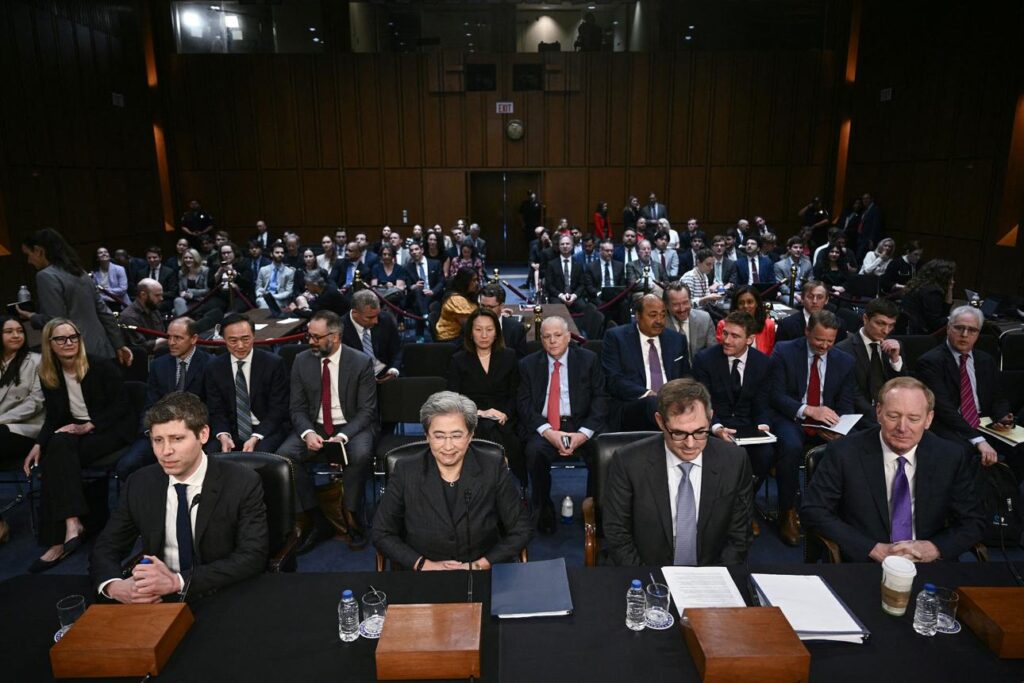


The debate around artificial intelligence governance is accelerating rapidly in the United States, as lawmakers introduce a new wave of bills aimed at controlling how advanced AI systems are developed and deployed. These proposals focus on two particularly sensitive areas: the use of AI in military applications and transparency requirements around AI training data.
As AI systems become more powerful and integrated into critical infrastructure, policymakers are attempting to strike a balance between innovation and safety. The latest legislative push reflects growing concern that without clear rules, AI could introduce risks ranging from misinformation and bias to autonomous weapons escalation and lack of accountability.
Rising Momentum for AI Governance in the US
Over the past few years, AI regulation in the United States has largely been fragmented—guided by executive orders, agency guidelines, and voluntary commitments from tech companies. However, the newest legislative proposals signal a shift toward more structured federal oversight.
Lawmakers from both major political parties are increasingly aligned on the idea that AI needs baseline guardrails. While there is disagreement on the exact scope, there is shared concern about three core issues:
- National security risks from autonomous AI systems
- Lack of transparency in training data and model development
- Potential misuse of generative AI in public discourse and elections
The new bills introduced in Congress aim to directly address these concerns through enforceable legal frameworks rather than voluntary industry standards.
Military AI Restrictions: Preventing Autonomous Escalation


One of the most controversial components of the proposed legislation is the restriction of AI in military applications, particularly systems capable of autonomous decision-making in lethal scenarios.
What the proposals aim to restrict
The bills generally focus on limiting or regulating:
- Fully autonomous weapons systems that can select and engage targets without human intervention
- AI-driven battlefield decision systems that could escalate conflicts unpredictably
- Use of generative AI for strategic military planning without human oversight
Supporters of these restrictions argue that allowing machines to make life-and-death decisions introduces unacceptable ethical and security risks. They warn of a future where escalation happens faster than human commanders can respond.
The push for “meaningful human control”
A recurring principle in the legislation is the concept of “meaningful human control.” This means that even if AI is used for analysis, targeting support, or logistics, a human must remain responsible for final decisions in lethal contexts.
Advocates say this requirement preserves accountability and ensures that moral responsibility cannot be delegated to algorithms. Critics, however, argue that strict rules could slow down military response times and put national defense at a disadvantage compared to countries with fewer restrictions.
Transparency Rules for AI Training Data


Another major focus of the new bills is transparency in how AI systems are trained. This includes requirements for companies to disclose information about the datasets used to build large-scale models.
Why training data transparency matters
Modern AI systems learn from enormous datasets that can include:
- Publicly available text and images
- Licensed or proprietary content
- Data scraped from websites
- User-generated content from platforms
However, the exact composition of these datasets is often not disclosed in detail. This lack of transparency has raised concerns about:
- Copyright and intellectual property violations
- Embedded biases in training data
- Inability to audit or reproduce model behavior
- Potential privacy violations
Proposed requirements
The legislation under discussion would require AI developers to:
- Provide documentation describing major categories of training data
- Disclose whether copyrighted or personal data was used
- Maintain audit trails for regulatory review
- Offer summaries of dataset composition for high-risk models
Some proposals go further by suggesting third-party audits for large AI systems, especially those used in healthcare, finance, or government services.
Industry concerns
AI companies argue that full transparency could expose trade secrets and make it easier for competitors to replicate their models. They also point out that modern datasets are so large and complex that fully documenting every data point may be impractical.
As a result, a compromise approach is emerging: “tiered transparency,” where more detailed disclosures are required only for high-risk applications.
Industry Reaction: Innovation vs Regulation


The tech industry has responded to the proposed regulations with a mix of support and caution. Many leading companies acknowledge the need for oversight but warn against overly restrictive rules that could slow innovation.
Support for clear standards
Some AI developers welcome federal regulation, arguing that:
- Clear rules create a level playing field
- Standardized requirements reduce legal uncertainty
- Public trust in AI systems will increase
- Responsible companies are already moving toward compliance
In particular, companies working on enterprise and government AI tools see regulation as a way to build credibility and long-term stability in the market.
Concerns about overregulation
On the other hand, critics worry that:
- Heavy compliance burdens could favor large tech firms over startups
- Innovation cycles may slow due to legal review processes
- Ambiguous definitions of “high-risk AI” could create confusion
- International competitiveness could be reduced
This tension between safety and innovation is shaping much of the debate in Washington.
The Global Context of AI Regulation
The United States is not acting in isolation. Around the world, governments are also moving toward stronger AI governance frameworks.
The European Union, for example, has already advanced comprehensive AI legislation that categorizes systems based on risk levels and imposes strict obligations on high-risk applications. Meanwhile, countries in Asia and the Middle East are developing their own national AI strategies, often focusing on economic competitiveness and infrastructure development.
The US approach appears to be more decentralized so far, but the new proposals suggest a possible shift toward a more unified national framework.
This global regulatory race raises important questions:
- Will fragmented regulations slow global AI development?
- Can international standards be aligned across regions?
- Or will AI governance become another arena of geopolitical competition?
Key Challenges Ahead
Despite growing momentum, AI regulation in the US faces several major challenges.
1. Defining “high-risk AI”
One of the biggest difficulties is deciding which systems should fall under strict regulation. AI is used in everything from spam filtering to medical diagnosis, and not all applications carry the same level of risk.
2. Rapid technological change
AI systems evolve faster than legislation can be written. By the time rules are finalized, new architectures and capabilities may already have emerged.
3. Enforcement complexity
Even if laws are passed, enforcing them across global companies operating in multiple jurisdictions will be difficult.
4. Balancing innovation and safety
Policymakers must avoid stifling beneficial AI developments in areas like healthcare, climate modeling, and education while still preventing harmful misuse.
What This Means for the Future of AI in the US
The introduction of these bills marks a turning point in how the United States is approaching artificial intelligence governance. Rather than relying solely on voluntary industry standards, lawmakers are signaling a willingness to establish binding rules for critical aspects of AI development.
If passed, these regulations could reshape:
- How AI models are trained and documented
- How military systems integrate AI technologies
- How companies disclose their data practices
- How users and governments trust AI systems
At the same time, the outcome of these proposals will likely depend on ongoing negotiations between policymakers, industry leaders, and civil society groups.
Conclusion
The intensifying push for AI regulation in the United States reflects a broader global recognition that artificial intelligence is no longer just a technological innovation—it is a foundational infrastructure shaping security, economy, and society.
By targeting military AI restrictions and training data transparency, lawmakers are addressing two of the most sensitive areas in AI development. However, the challenge remains in designing rules that protect public interest without stifling innovation.
As debates continue, one thing is clear: the era of largely unregulated AI expansion is giving way to a more structured and accountable framework. The decisions made now will shape not only the future of AI in the US, but also its role in the global technological landscape for years to come.